How to Practise Trading Without Risking a Rupee: A 4-Week Demo Account Plan
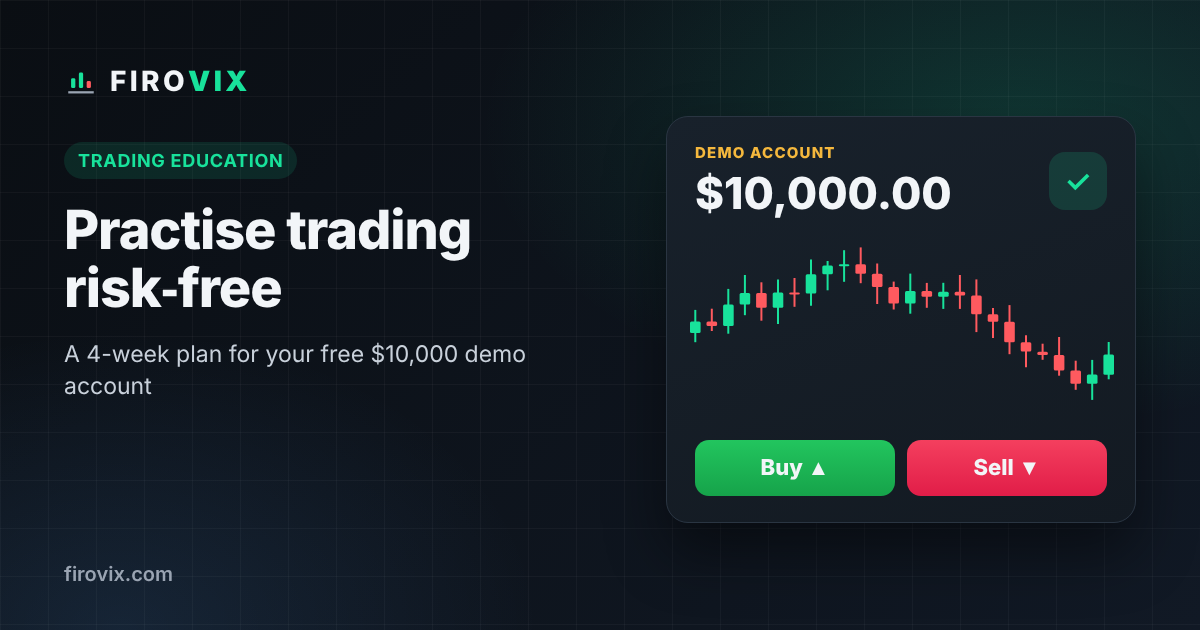
Learn a simple 4-week plan to practise trading on a free $1000 demo account: set rules, test indicators and track results before risking real money.
थप पढ्नुहोस्What are OTC currency pairs and how do they differ from market pairs? Learn how OTC prices work, which tools fit them and 5 rules for weekend trading.
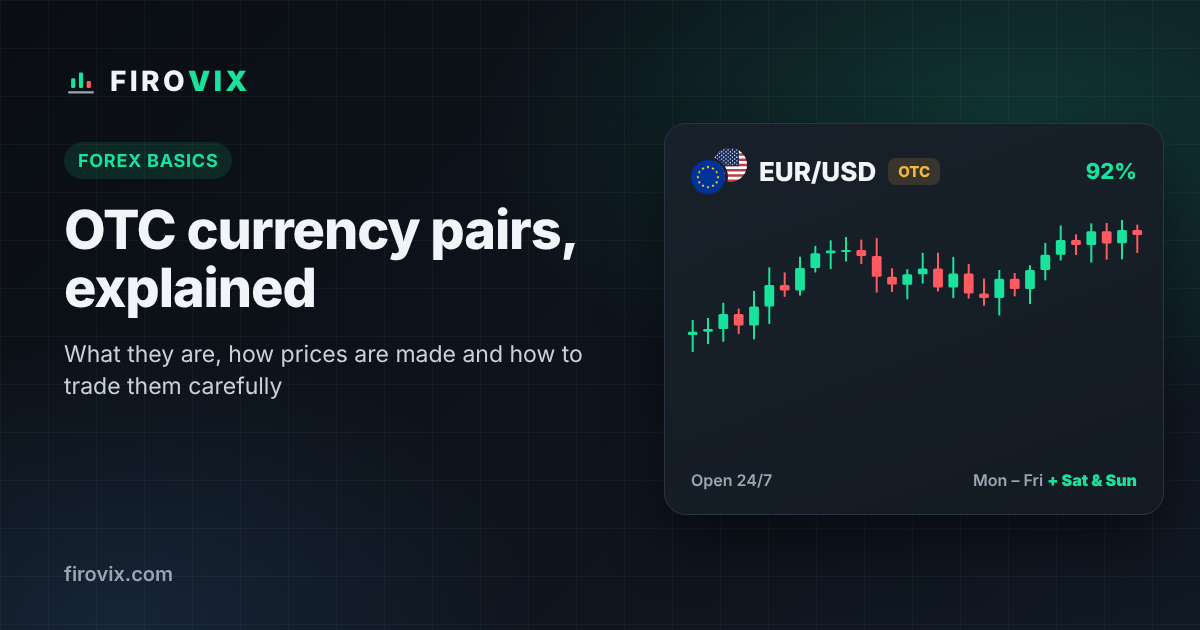
It's Sunday afternoon. The banks are closed, the news is quiet, and the real currency market has been asleep since Friday night. Yet on your trading app, "EUR/USD (OTC)" is happily moving up and down. So what exactly are you looking at?
That little "OTC" label confuses a lot of people — and honestly, a lot of traders never stop to ask about it. They see a chart that looks like EUR/USD, assume it is EUR/USD, and start trading it with the same news-based logic they'd use on a Tuesday morning. That's where the trouble starts.
In this guide I'll explain what OTC pairs really are, how they differ from normal market pairs, and how to approach them with your eyes open. I'll use FIROVIX as the example throughout, because it labels its OTC pairs clearly and explains where the prices come from.
OTC stands for over-the-counter. In general finance, it simply means a deal made directly between two parties rather than on a public exchange. Plenty of big, perfectly normal markets work this way.
On short-term trading platforms, though, the term has a more specific meaning. An OTC pair is a price feed provided by the platform itself — usually so you can keep trading when the global currency market is closed, for example from Friday night to Sunday night, or late at night in your time zone.
On FIROVIX, the OTC list includes EUR/USD, GBP/USD, USD/JPY, AUD/USD, USD/PKR, USD/INR, Gold and several more. Their prices come from FIROVIX's own price engine rather than from the interbank market, and they're available 24 hours a day, 7 days a week.
The key idea in one line: "EUR/USD (OTC)" is not a window onto the real euro–dollar market. It's the platform's own instrument that borrows the name and a realistic price level.
| Question | OTC pair (e.g. EUR/USD OTC) | Market pair (e.g. BTC/USDT on FIROVIX) |
|---|---|---|
| Where does the price come from? | The platform's own price engine | A public market feed |
| When can I trade it? | 24/7, weekends included | Whenever the source market is open (crypto runs 24/7) |
| Does world news move it? | No direct link | Yes |
| Will it match prices on other websites? | Not necessarily | Closely |
The practical takeaway is simple but important: news and economic calendars don't drive OTC prices. If your strategy is "buy the dollar after a strong US jobs report" or "sell the pound when the Bank of England sounds worried", it doesn't apply to OTC pairs at all. Save those ideas for real market instruments.
OTC charts still form candles, trends and ranges, so the usual technical tools can help you read them. Here's what you should expect after watching them for a while:
One more thing worth checking on any platform: who decides whether your trade won? On FIROVIX, the server records your opening price the moment you click, and settles the result on the price at the exact second your trade expires. Nothing you (or anyone else) changes on the web page can alter that outcome. If the price feed ever stops, the trade is cancelled and the money returned rather than guessed.
Because OTC prices aren't pushed around by headlines, simple technical tools tend to be the most useful. You don't need ten of them — three is plenty:
All three are among the 16 free indicators on FIROVIX, together with drawing tools for trend lines and horizontal levels. Try them on the FIROVIX trading charts with the free demo account before you even think about trading anything for real.
OTC pairs are a convenience. They let you practise and trade when the normal markets are closed — on weekends, on holidays, late at night. But they are not the real currency market, and they're not "easier" either. Treat them as their own instrument, learn how they move on a demo account first, and keep your risk small and boring.
If you'd like to see OTC pairs in action without risking a single rupee, open a free FIROVIX account. You'll get a $10,000 demo balance straight away, in English, Arabic, Urdu, Hindi, Bengali or Nepali.
Risk warning: trading carries a high level of risk and you can lose all the money you invest. OTC prices on FIROVIX are produced by the platform's own price engine and may differ from prices elsewhere. Live trading is offered only where it is available. This article is for education, not financial advice.
फरेक्स र CFD लिभरेजसहितका जटिल उत्पादन हुन् जसमा छिटो पैसा गुमाउने उच्च जोखिम हुन्छ। धेरैजसो खुद्रा ट्रेडरले पैसा गुमाउँछन्। यस साइटमा केही पनि लगानी सल्लाह होइन। गुमाउन सक्ने पैसाले मात्र ट्रेड गर्नुहोस्, र तपाईंको देशमा फरेक्स ट्रेडिङ कानुनी छ कि छैन जाँच गर्नुहोस्।
Learn a simple 4-week plan to practise trading on a free $1000 demo account: set rules, test indicators and track results before risking real money.
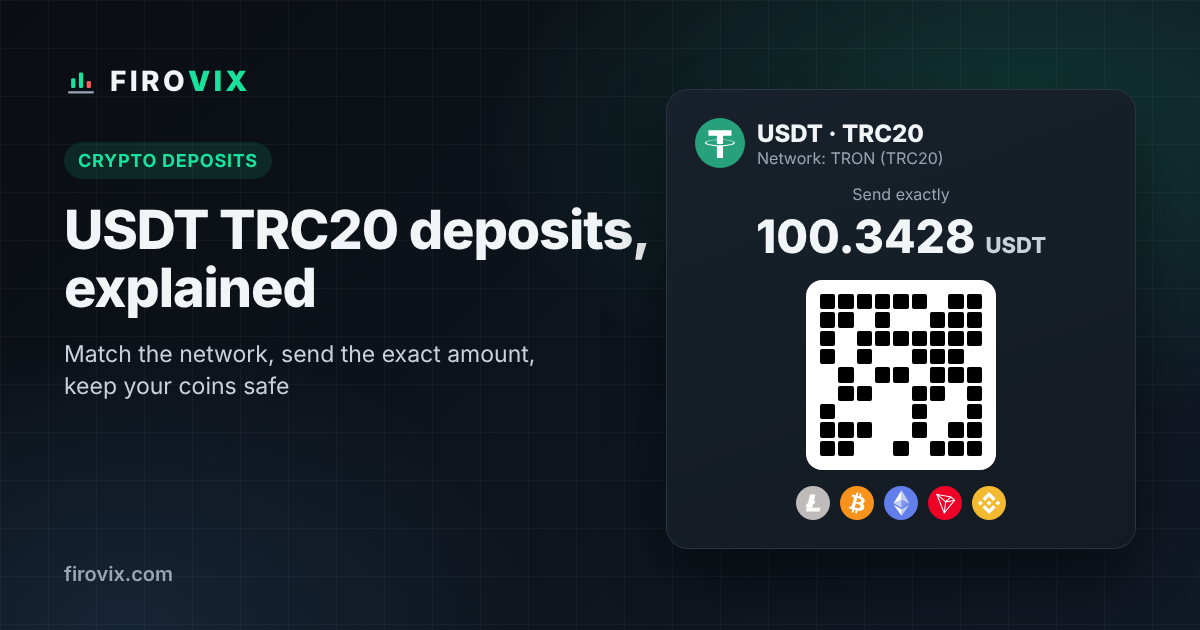
थप पढ्नुहोस्TRC20, BEP20 or ERC20? Learn how USDT deposits work, why the network matters, and how to send the exact amount safely to a trading platform like FIROVIX.
थप पढ्नुहोस्